
Splitting hair alert!

“Existing is subject to coming and going.”
To exist (existere), to stand out.
The phrase “to exist (existere), to stand out” plays on the Latin root of our word exist: the verb existere (also spelled exsistere), which literally means “to step out, stand forth, emerge, or appear.”
Etymological sense
In Latin, existere combines ex‑ (“out of, forth”) and sistere (“to cause to stand” or “to place”). So, to exist is to be “made to stand out” of non‑being or from nothingness into presence.
Philosophical flavor
When someone says “to exist, to stand out,” they often intend a poetic or existential twist: existence is not just passive being, but a kind of emerging, appearing, or standing‑out from the void or background of not‑being. In that sense, every thing that exists is, in a small way, “standing out” into reality.
God was not created.
“In Him we live and move and have our being.”
God as first principle.
In philosophical and theological traditions, God is frequently defined as the ultimate “first principle”—the foundational, uncaused reality from which all other existence derives. This conceptualization frames God not merely as a creator but as the necessary bedrock upon which all logic, causality, and being must rest.
Metaphysical Foundations
Across history, philosophers have utilized the idea of a first principle (arche) to identify the ultimate explanation for the universe. In this framework, God serves as the “uncaused cause” or the “ground of being,” providing an origin that does not require further explanation.planksip
The following table summarizes how key thinkers have categorized God as a first principle:
| Thinker | Conceptualization of First Principle |
|---|---|
| Aristotle | The “Unmoved Mover” responsible for all motion. |
| Thomas Aquinas | The necessary being, efficient cause, and source of perfection. |
| René Descartes | A perfect being that validates the reality of human perception. |
| Baruch Spinoza | The single, infinite substance (Deus sive Natura). |
Theological Perspectives
In Christian scholasticism, Duns Scotus famously addressed God as the First Principle (De Primo Principio), emphasizing God as the most eminent efficient cause and the ultimate end of all things. This approach seeks to bridge the gap between faith and reason, arguing that the existence of a supreme, foundational entity is a rational necessity.
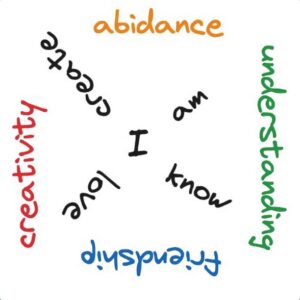
Conversely, some mystical and nondual approaches, such as those found in the lectures of Neville Goddard, invert this outward search. They identify the “first principle” as the inward realization of “I AM,” suggesting that the foundational reality of God is synonymous with one’s own immediate, conscious awareness.
Does this distinction between God as an external, metaphysical cause versus an internal, conscious reality align with your interest in nondual philosophy?
This approach seeks to bridge the gap between faith and reason, arguing that the existence of a supreme, foundational entity is a rational necessity.